Furlan Marri’s second Australian Edition arrives at 39mm with a hunter caseback and a chocolate dial. The story of where it came from is more interesting than the one we’re being told.
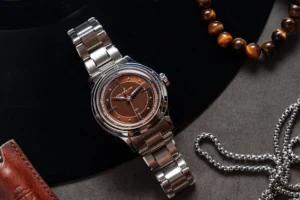
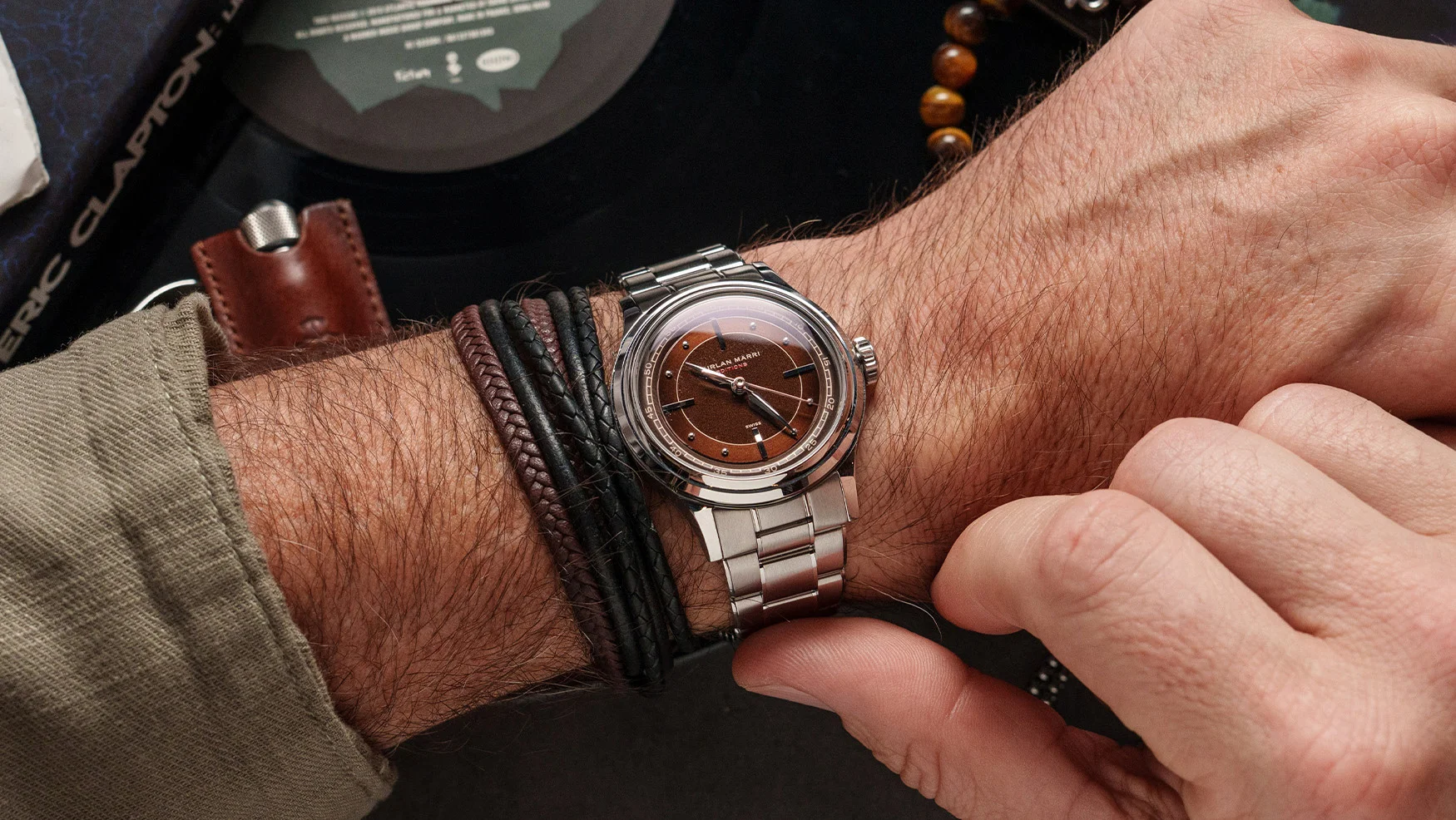
The first thing I saw was the soil. Deep brown, rose gold catching the light across it. That is Australian earth. Red dirt, the stuff you see out past the last town, going orange and then almost black depending on where the sun sits. I don’t think that reading is a stretch. It is the whole reason the watch is called what it’s called, and it is the reason I wanted to write about it. So let’s talk about what it is, and then let’s talk about the two things nobody else is talking about.
Three watches, not two
To understand the Songlines you need three watches on the table, not two.
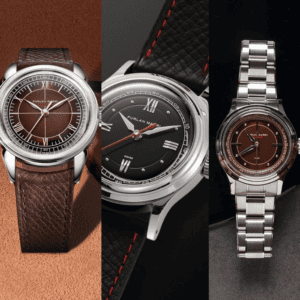
The Outback Elegy came first, January 2024, reference 2222-A. It was the first Furlan Marri x Time+Tide collaboration and the first watch under Furlan Marri’s Editions banner. 37.5mm across, 10.5mm thick, 46mm lug to lug, 50 metres of water resistance. Brown sector dial with a crosshair, applied Roman numerals in 4N rose gold plated steel, curved and domed hands in the same finish. Two leather straps, no bracelet. It’s retired now.
The Red Hunter came second, in 2025, and this is the one people forget. It wasn’t a Time+Tide collaboration at all. It was Furlan Marri’s own fourth anniversary piece. 36mm, 11.6mm thick, 44mm lug to lug, and it introduced the hinged caseback. Black lacquered dial, applied indexes, printed indication in light cream, polished domed steel hands, red text. It came on a steel bracelet with two leather straps. And it had 100 metres of water resistance.
The Outback Songlines is third, September 2026. 39mm, 12mm thick, 100 metres, hinged caseback, steel bracelet, chocolate dial.
What it took from each
Here is what I think is actually going on. From the Elegy, the Songlines takes the colour. The chocolate brown, the rose gold warmth, the Outback name. That’s close to the full extent of it. The Roman numerals are gone. The crosshair is gone. The numbered five minute sector track is gone. The gold toned leaf hands are gone. The leather only strap situation is gone.
From the Red Hunter, it takes nearly everything else. The dial is built the Red Hunter way, a central zone with a printed outer minute track in cream, rather than the Elegy’s sector and crosshair layout. Batons at the quarters instead of Romans. Polished steel hands rather than rose gold plated ones. The red text. The hinged caseback. The 100 metre rating. The steel bracelet. The La Joux-Perret G100 with a tungsten rotor in 4N rose gold.
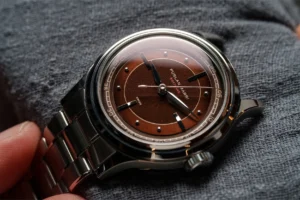
What is genuinely new to the Songlines is short: polished steel half spheres at the intermediate hours, spear shaped alpha hands, a three link bracelet, and 39mm.So the Songlines is a Red Hunter wearing the Elegy’s colours, grown three millimetres.
Time+Tide tell it the other way around. Their launch copy positions this as the Elegy evolved, and sells the 100 metres and the bracelet as what you gain by that evolution. Both of those were already sitting on the Red Hunter at 36mm, a year earlier, on a watch Time+Tide had nothing to do with.
I want to be fair here, because this isn’t a lie. The Elegy genuinely is the commercial predecessor. Same partnership, same theme, same name on the dial. Time+Tide are telling a true story. They’re just leaving out the more interesting one.
The caseback
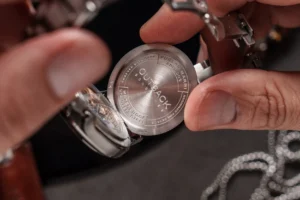
The proper term is a hunter caseback, sometimes called an officer caseback. It comes from hunter case pocket watches, where a hinged metal lid covered the crystal over the dial to protect it. Here it’s flipped to the back, a solid cover over the display back, opened with a discreet notch on the side.
Let’s be clear about what it’s for. The sapphire underneath has five layers of anti reflective coating and an anti fingerprint coating, so it isn’t under threat from anything and the cover isn’t protecting it. This is decoration.
Which is fine. It’s more than fine, actually. Opening a caseback with your thumbnail to look at the movement is one of the small pleasures of owning a mechanical watch, and most watches don’t offer it. There’s a Time+Tide marking engraved on the inside of the lid, which you only ever see when it’s open, and I like that they bothered. Just don’t let anyone sell it to you as a technical feature, because it isn’t one.
The movement
All three watches run the same La Joux-Perret G100. Swiss made, assembled in La Chaux-de-Fonds. Automatic, 28,800vph, 24 jewels, 68 hour power reserve, rated to plus or minus seven seconds a day. Geneva stripes, snailing, blued steel screws.

The difference is the rotor plating. The Elegy’s rotor is tungsten with a galvanised palladium coating and gold engravings. The Red Hunter and the Songlines both use tungsten with a 4N rose gold coating.
While we’re here, because I get asked this every single time a watch has gold on the dial: none of this is solid gold. 4N is a colour designation for a pink gold tone, and on these watches it’s a coating. The Elegy’s Roman indexes and hands are 4N rose gold plated stainless steel. The Songlines rotor and seconds hand are 4N plated. Plating over steel and tungsten, right through the line. That isn’t a criticism. At this price it is exactly what it should be. But if anyone tells you there’s gold on this watch, that is what they mean.
What I think
Two things, and they don’t cancel each other out.
My own taste runs dressier. It always has. The Elegy is the dressier watch, and the sector dial, the Roman numerals, the crosshair, 37.5mm and 10.5mm on leather, that’s Furlan Marri doing the thing they built their name on. If you put both in front of me and told me to pick one for myself, I’d probably still reach for the Elegy. That’s a preference, not a verdict.
But I like this watch a lot, and the reason is the thing my taste should make me resistant to. Furlan Marri don’t really have a sporty watch. Look at the catalogue. Mechaquartz chronographs, the Cornes de Vache sector automatics, the Disco Volante. Dress pieces, near enough all of them. The Red Hunter hinted at another direction with its 100 metres and its steel bracelet, but it was a 36mm anniversary piece and it read as a one off.This is the brand actually going there.
And the bracelet is why it works. Three link, steel, with sunken bevels along the shoulders, against a case that has grown to 39mm and 12mm and lost the Elegy’s delicacy. Those two things are made for each other. A three link is a sports bracelet, plain and simple, and on a case with this much presence it looks correct in a way the Elegy on leather never would have if you’d tried to force it. The alpha hands belong to the same decision. Nothing here is hedged. They picked a direction and built the whole watch around it.
So I think it lands with more people than the Elegy did, and I don’t say that as a compliment to the market at the expense of the watch. A 39mm steel watch on a bracelet with 100 metres and a 68 hour movement is simply easier to own than a 37.5mm dress watch on leather. Most people want the easier watch. This time I’m closer to most people than I expected to be.
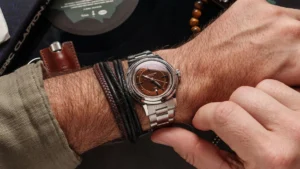
On size, one honest note. The case grew from 37.5mm to 39mm and from 10.5mm to 12mm, and that is a real change in how it will sit.
More brands should be looking to Australia
I want this on the record because it matters more than any single watch. Time+Tide is Australian-founded and Melbourne-born, and this is the second time they’ve pulled a Swiss brand into a piece built around this country. Furlan Marri now have two Australian Editions in their catalogue.
I live here, and that changes how this watch reads for me. I’m not pretending otherwise. When I look at that dial I’m looking at ground I’ve actually driven across, and a watch that gets it right is going to land differently for me than it does for someone in London. That’s worth declaring rather than hiding behind neutral language.
The collector community here is small and it is tight, and it is a long way from Geneva in every sense. Brands mostly don’t think about us. When one does, people notice and they turn up.
So yes, more of this please.
What is Songlines
Which brings me to the part I can’t write around.
Songlines are pathways across the land that trace the journeys of ancestral beings from the Dreaming. They’re held in song, story, dance and art. They’re memorised and performed, not read. They carry landmarks, water sources, law and navigational knowledge, and they’ve done so across tens of thousands of years. They span many language groups and much of this continent. They are not a metaphor and they are not a mood. They are sacred, and they are knowledge systems belonging to specific peoples.
Time+Tide’s launch material uses the name throughout. It never explains what a Songline is. It never mentions Country. The dial is described as chocolate.
The Specs
The Basics
Case: 316L stainless steel, 39mm diameter, 12mm thick, screw down crown
Lug to lug: 47mm per the spec table, though Time+Tide’s prose says 46mm (see above)
Dial: Chocolate sunburst, grained and circular brushed lacquer finishes, applied curved indexes with polished steel half spheres at the intermediate hours
Hands: Spear shaped alpha hands in polished steel, 4N rose gold plated seconds hand
Water resistance: 100m (10 ATM)
Crystal: Sapphire front and back, the rear beneath a hinged hunter caseback
Bracelet: Three link stainless steel with sunken shoulder bevels and folding clasp, plus a brown calf quick release strap
The Movement
Caliber: La Joux-Perret G100, Swiss made, assembled in La Chaux-de-Fonds
Functions: Hours, minutes, seconds
Winding: Automatic, tungsten rotor with 4N rose gold coating
Frequency: 28,800vph (4Hz)
Power reserve: 68 hours
Accuracy: ±7 seconds per day
Pricing & Availability
Price: A$3,750 incl. GST / £2,095 incl. VAT / US$2,750 / €2,000 excl. VAT
Availability: FounderFest from 19 September (US, UK, AU); online globally for 24 hours from 22 September; then exclusive to Time+Tide Discovery Studios in London, New York and Melbourne