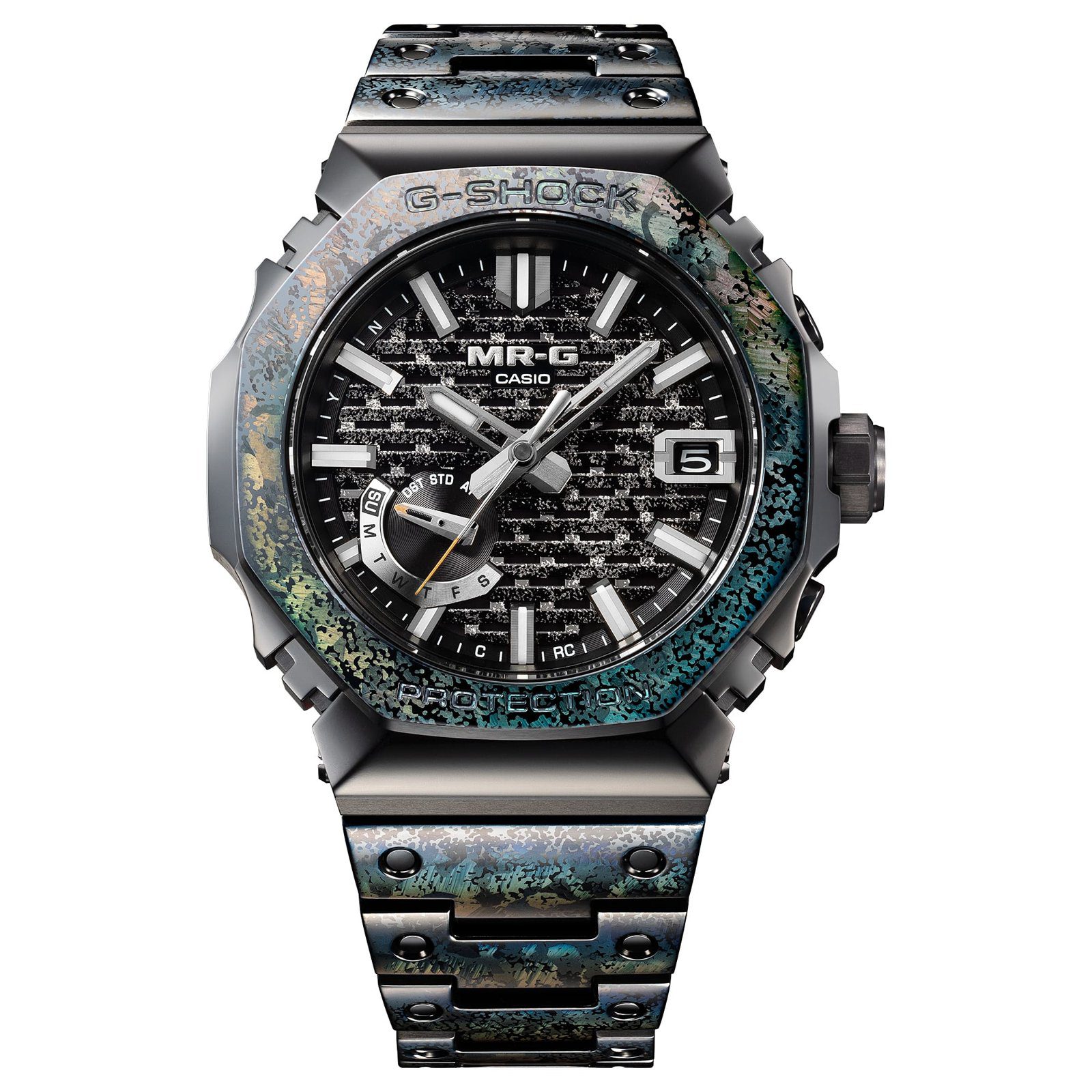
The G-Shock MRG-B2100HR marks 30 years of MR-G, the top line of G-Shock. Every one of its 800 dials is finished by hand in platinum leaf by a single Kyoto artist.
MR-G is the part of G-Shock most people never see. It started in 1996 as Casio’s answer to a simple question: what happens when a shock-resistant watch is built with the best metals and finishing the company can make? Thirty years later, the answer comes with an artist’s name attached.
Casio announced the G-Shock MRG-B2100HR-1A on 24 September 2026. It is limited to 800 pieces worldwide, and each one carries a serial number.
The artist behind the G-Shock MRG-B2100HR
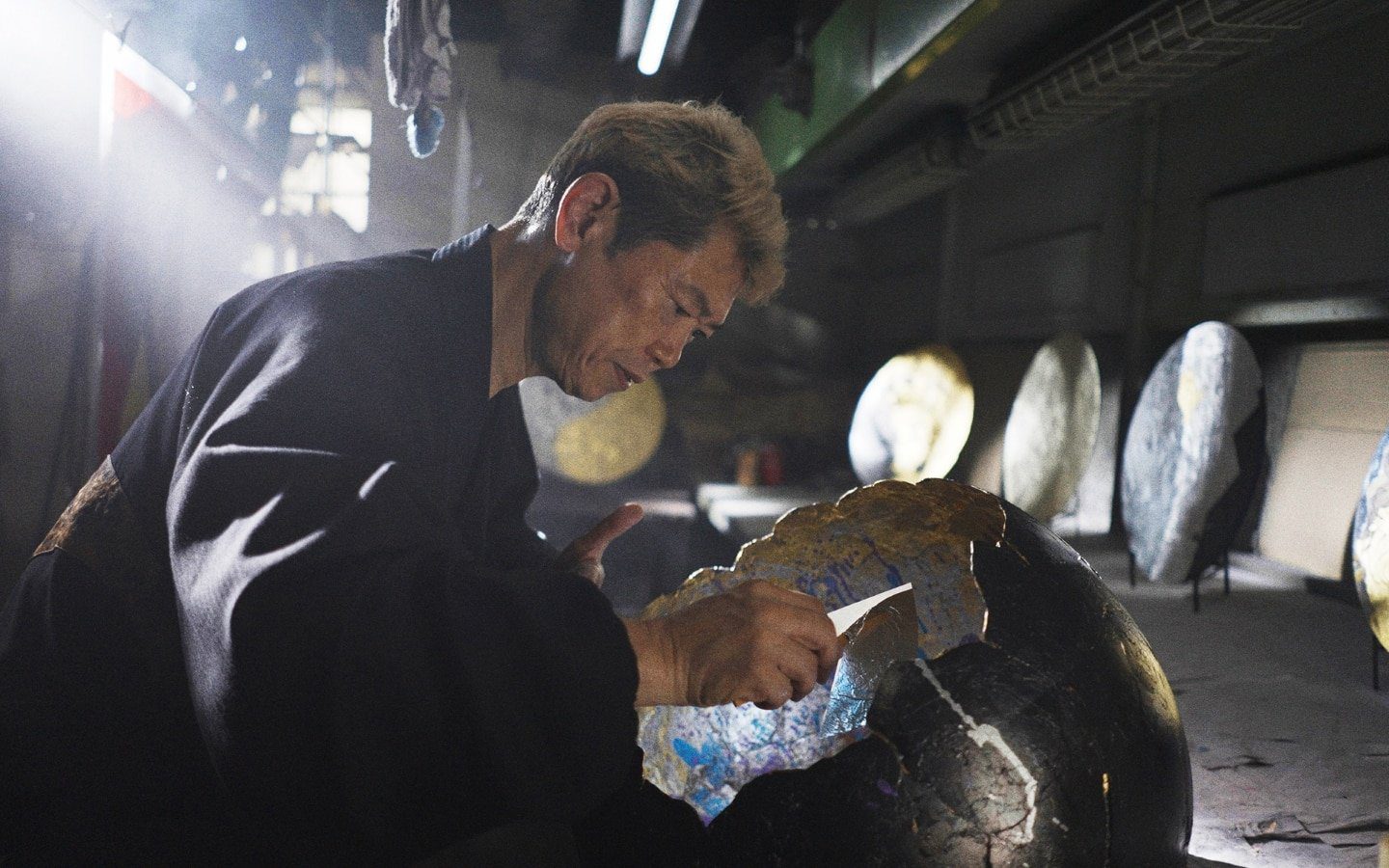
Hiroto Rakusho was born in 1962 in Nishijin, the weaving district of Kyoto. He learned metal leaf from his father, Jisaku Nishiyama, and started his own brand in 2002.
Japan’s Ministry of Economy, Trade and Industry certifies him as a Master of Traditional Crafts. Kyoto Prefecture also recognises him as a Master Craftsman of Kyoto. Metal leaf in Nishijin grew up to decorate woven textiles. Casio says Rakusho has spent his career taking it beyond that, including work with the Digital Archive Project to preserve cultural artefacts.
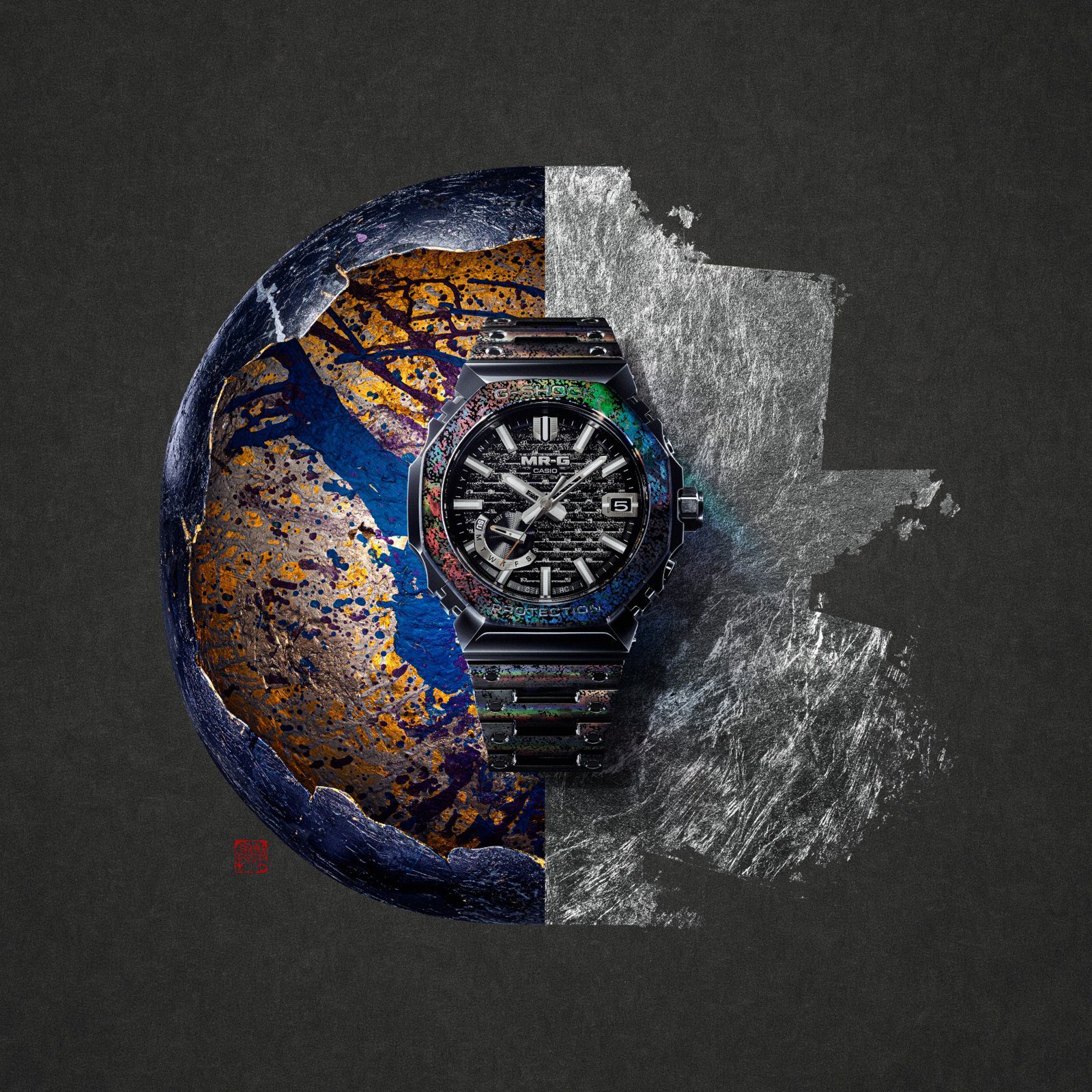
For this watch, Casio gave him a theme: haruka, which translates as eternity. He answered with an original artwork, the half-gold, half-silver globe you see behind the watch in the picture above. The watch design was built around it.
The dial, finished by hand
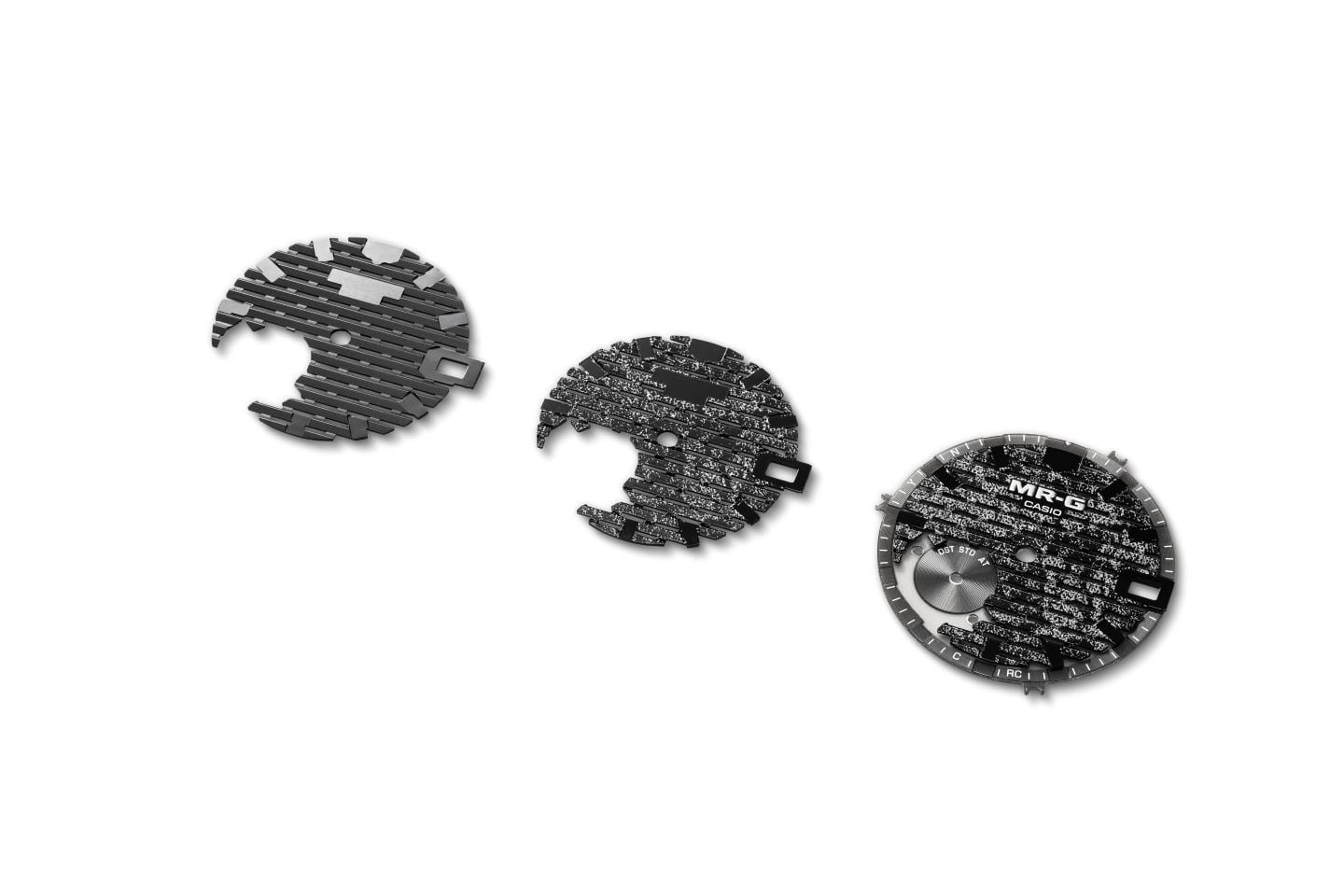
This is the part that makes the G-Shock MRG-B2100HR different from every MR-G before it.
The dial has a raised lattice pattern inspired by kigumi. Kigumi is a traditional Japanese way of joining wood without nails or metal fittings. Rakusho applies powdered platinum leaf over that lattice himself, on every one of the 800 dials.
Casio says the powdered leaf creates a soft shimmer, with light and dark areas that give the dial depth. Because it is done by hand, no two dials will be exactly the same.
Bezel and bracelet: colour without paint
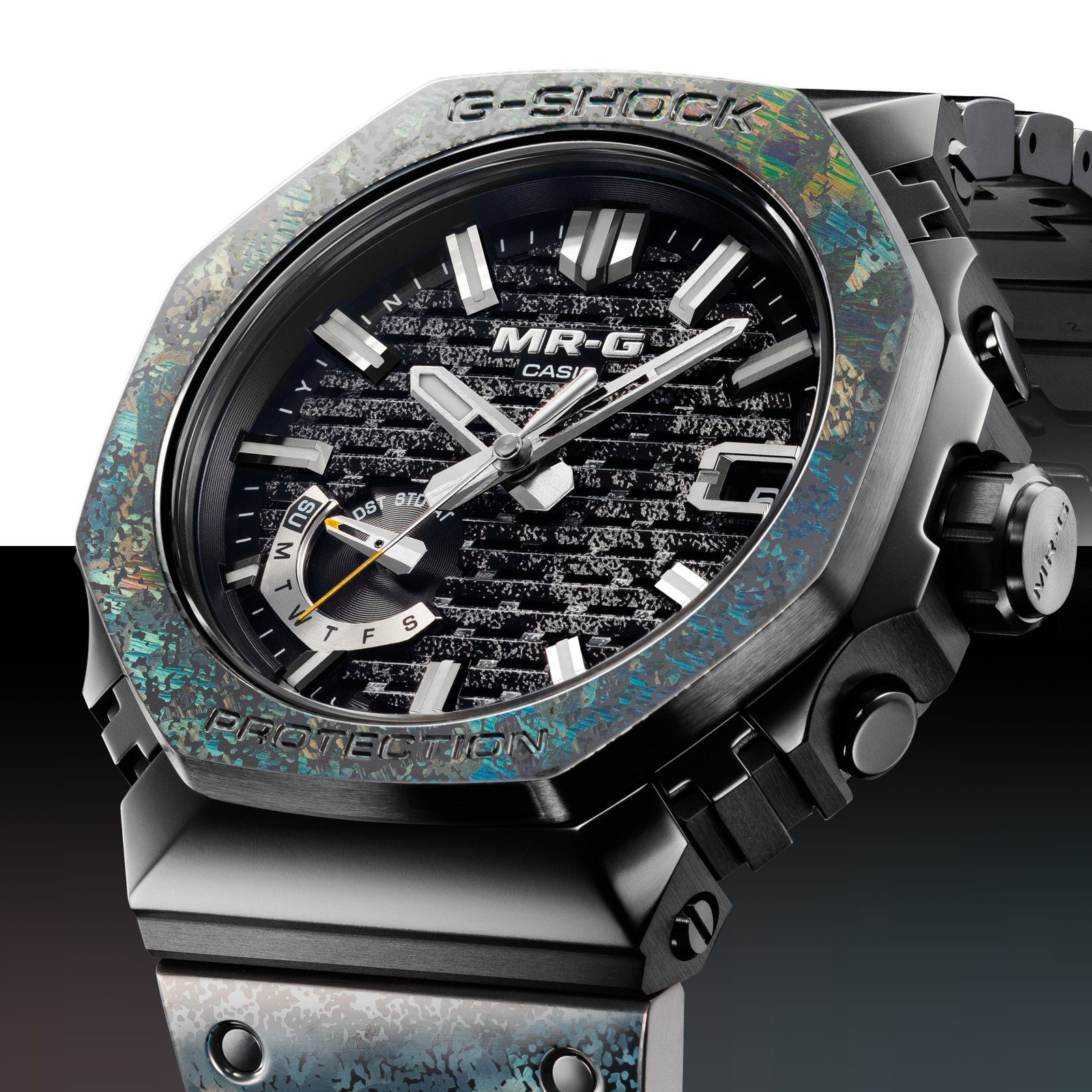
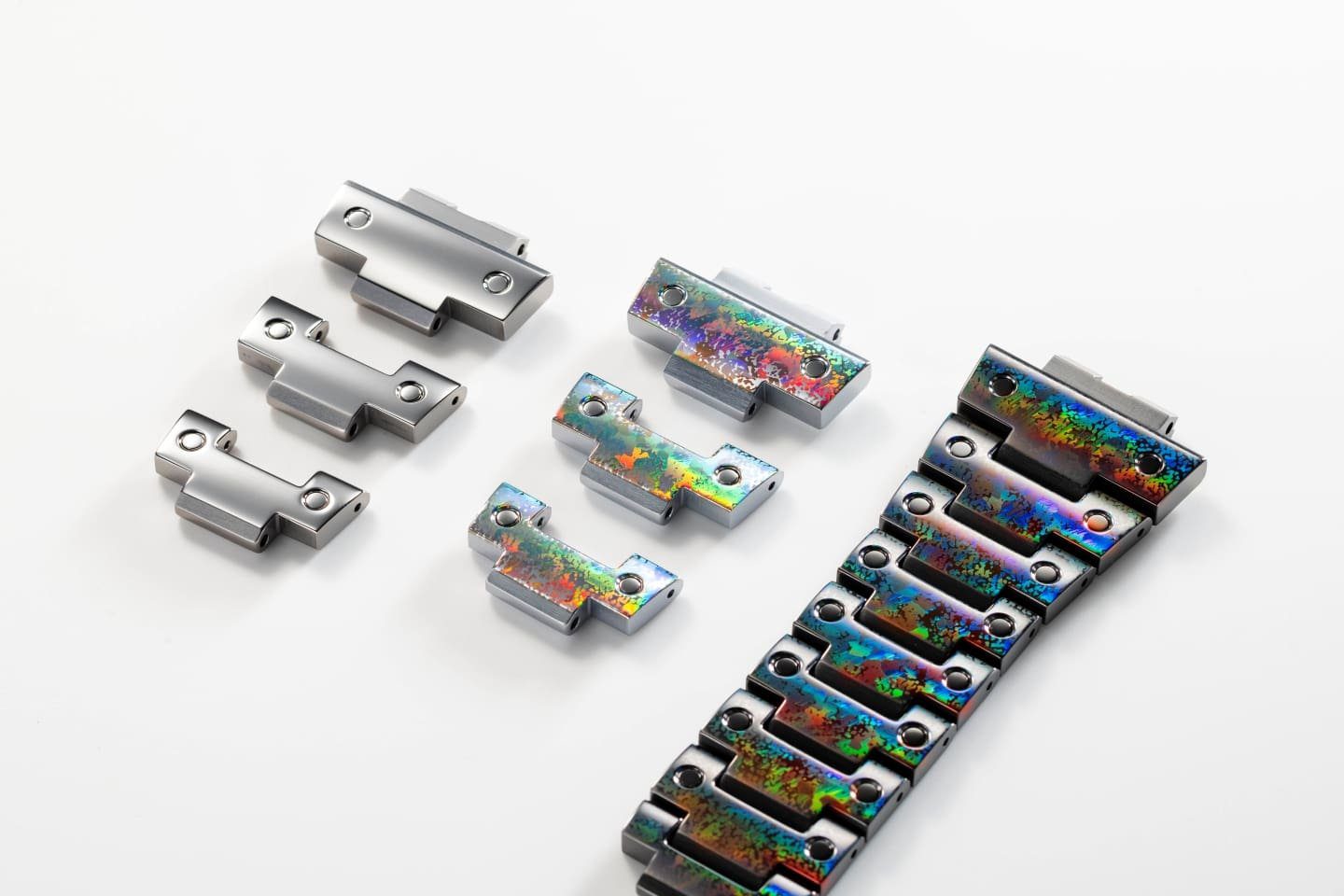
The bezel and bracelet do not carry leaf. They carry a texture designed to look like Rakusho’s leaf work, made with what Casio calls structural colour.
Structural colour is the effect you see on butterfly wings or some minerals. There is no pigment. The surface itself is shaped so finely that it splits light into colours. Casio creates it with an ultrashort-pulse laser, working at micron level. Casio’s pictures show blue, green and gold tones, and the colour changes as you turn your wrist.
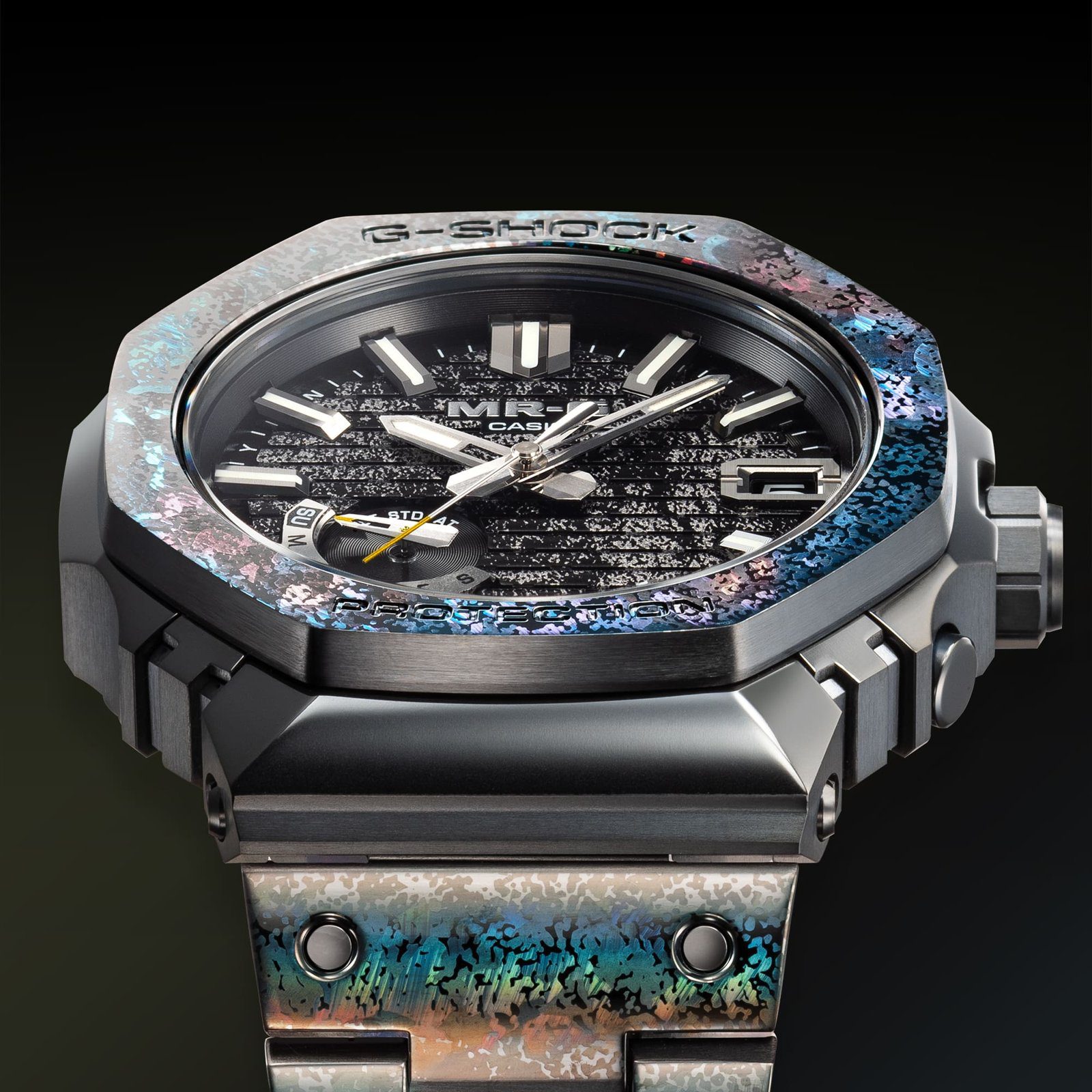
The bezel is built from 27 separate parts, each polished before assembly. The top of the bezel is COBARION, a hard cobalt-chromium alloy. The bracelet is DAT55G, another hard alloy, over a titanium case. The whole watch has a black DLC coating.
What changed from the original MRG-B2100
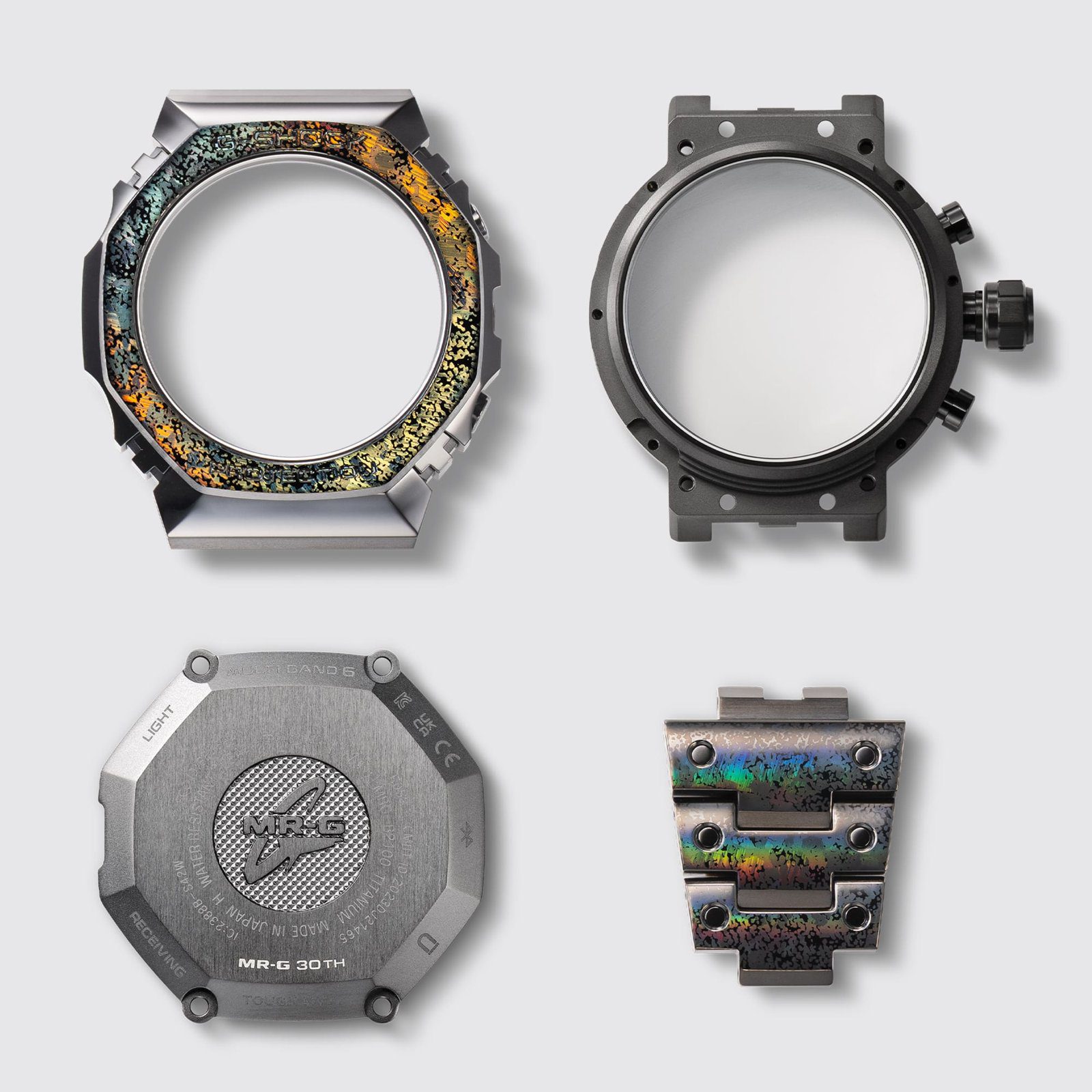
The G-Shock MRG-B2100HR is not a new watch underneath. It is built on the MRG-B2100, the octagonal MR-G that first arrived in 2024 as the MRG-B2100B-1A here is what carried over:
- The octagonal shape, the 49.5mm case and the 27-part bezel
- The kigumi lattice on the dial
- Titanium case, COBARION bezel top, DAT55G bracelet, DLC coating
- Tough Solar, Multi-Band 6 radio time signal and Bluetooth
Here is what is new:
- Platinum leaf, applied by hand by Rakusho, on every dial
- The laser structural colour on the bezel and bracelet
- A limit of 800 pieces, with a serial number
- An MR-G 30th anniversary engraving on the case back and a special box
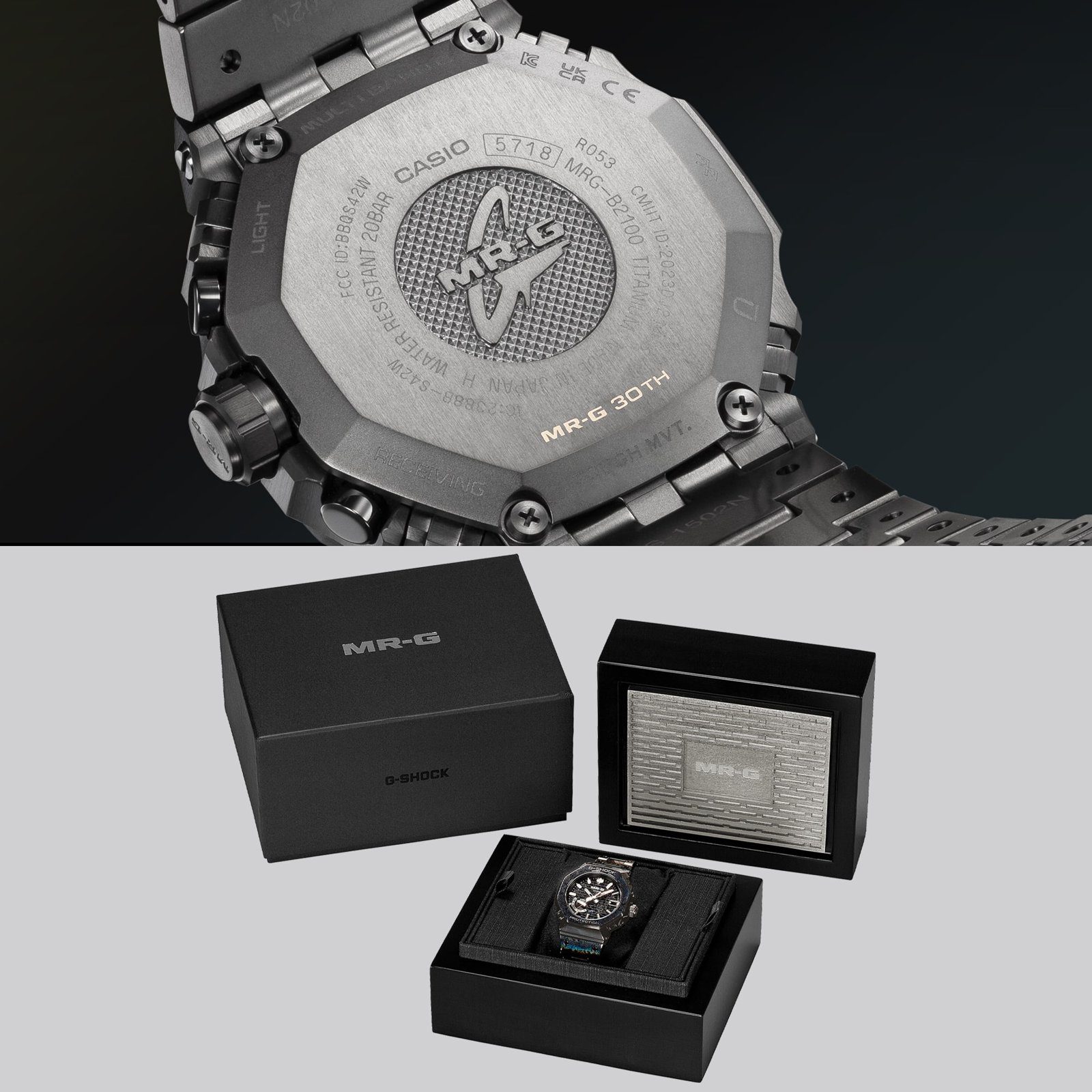
In short, the engineering is the same. What you pay for is the hand, the laser and the number on the back.
What We Think
I like this release, and the reason is the artist and the art. A G-Shock with a dial that one person finished by hand, 800 times, is a different kind of object from anything else in the catalogue.
I don’t like judging the price of an artist’s work. But if you are rational about it, putting almost A$10,000, or about US$7,000, into a G-Shock is something different. This is not a tool watch you buy for toughness.You buy it for the art on the dial, and what that art is worth is a question only you can answer.
The Specs
The Basics
- Reference: MRG-B2100HR-1A
- Case: Titanium, DLC coated, 49.5 x 44.4 x 13.6mm
- Weight: 122g
- Dial: Kigumi-inspired raised lattice, finished by hand in powdered platinum leaf by Hiroto Rakusho
- Bezel: 27 parts, COBARION top, laser structural colour texture
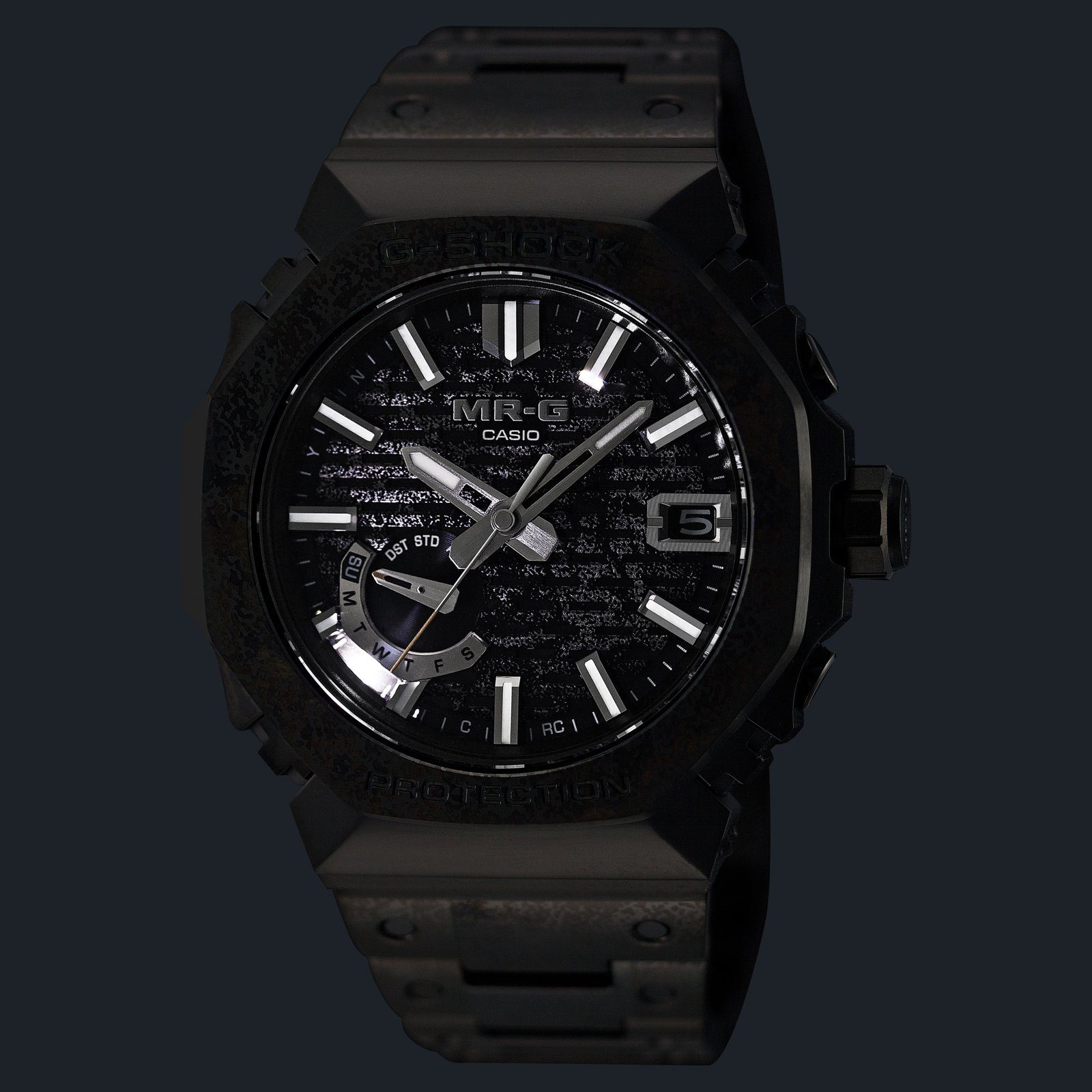
- Lume: Neobrite
- Light: White LED (Super Illuminator) with afterglow
- Water resistance: 200m
- Crystal: Sapphire, anti-reflective coating
- Crown: Screw lock
- Bracelet: DAT55G alloy with laser structural colour texture, tight-lock three-fold clasp, fits wrists of 150 to 205mm
- Limited edition: 800 pieces worldwide, serial numbered
The Movement
- Type: Quartz, Tough Solar (solar charged)
- Module: 5718
- Functions: Hours, minutes, seconds, day and date, full auto calendar to 2099, power saving, automatic hand position correction
- Time setting: Multi-Band 6 radio time signal and Bluetooth link to the CASIO WATCHES app
- Accuracy: Plus or minus 15 seconds a month without signal
- Battery: About 5 months from full charge in normal use, about 18 months in darkness with power saving on
- Shock resistance: Yes. Magnetic resistance: yes
Pricing & Availability
- Australia: about A$9,950, converted from the Japanese price. Casio has not announced an Australian price yet.
- United States: about US$7,000, converted from the Japanese price. Casio has not announced a US price yet.
- Japan: ¥1,100,000 including consumption tax. Release in November 2026, with pre-orders from 1 November.
Where to buy: Casio lists its authorised retailers in its store finders for Australia, the United States and other countries. With only 800 pieces worldwide, Casio has not said which stores will stock it.